Termite Barriers Protect Against Costly Infestation
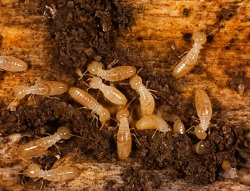
 Termites tend to be a problem, a big one. It is estimated that there are 300 species of termite throughout Australia with fifteen species which are likely to cause damage to your home's structural timbers. Mainly because the majority of termites are usually subterranean, they can end up being challenging to detect and usually their presence just isn't discovered until costly damage has already been carried out. That's the reason termite barriers are so important.
Concrete
Concrete barriers have been used for awhile as a preventative measure against harmful termites. Research has revealed, nevertheless, that termites need only a crack width of 1.4 millimeter to make it through a layer of concrete. As they tunnel through the crack, they line it together with mud. It's assumed that termites do this to safeguard their delicate bodies from the harsh concrete. Industry specifications (AS 2870) allow for crack widths of lower than 1 millimeter but there is still a chance of the barrier failing. Because of this, it is recommended that a concrete termite barrier be a part of a barrier system and not a standalone.
Woven Stainless Mesh
An additional common termite barrier may be physical barrier constructed of woven stainless mesh. One such barrier, TERMIMESH, was developed in Australia. It uses marine grade 316 steel mesh and has proven very efficient in preventing termite infestations. Studies have shown this specific technique of physical termite barrier to end up being very effective and it's traditionally used within the construction industry as precautionary measure in brand new structures.
Chemical Barrier
Chemical barriers are generally another popular method of preventing infestations. Because chemicals lose their potency over time, they must be reapplied periodically. Deltamethrin, an artificial pyrethroid, kills termites on contact. Furthermore, it acts as robust termite repellant, offering added protection. If effectively maintained and coupled with a highly effective physical barrier, this may be one of the more successful termite barriers. It should be mentioned, although that chemical barriers should end up being combined with a physical barrier for maximum protection.
 Vetiver Oil
Vetiver oil is "green" termite barrier. Produced from Tamil, a perennial grass native to India, vetiver oil may end up being put together with Nootkatone along with applied to impacted areas or as a barrier. In experiments, this particular combination not just interrupted the tunnelling of termites, however additionally resulted in decreased survival of the insects. As green option for termite defense, a vetiver oil along with Nootkatone combination is very successful termite barrier.
Treatment and prevention options may depend on the structure, whether termites have been detected either upon the property or currently infesting the structure. It ought to be noted, although, that a termite colony could stretch as much as one hectare. This means that in the event that one structure is definitely affected, neighbouring structures inside that range might be affected too.
Generally, pest control specialists recommend a variety of solutions to construct the very best termite barrier. Prevention that consists of an effective barrier in addition to periodic inspections usually are vital to prevent costly infestations.
If you're searching for info on termite barriers Gold coast then The Pest Company can help. For more information visit www.thepestcompany.com.au
